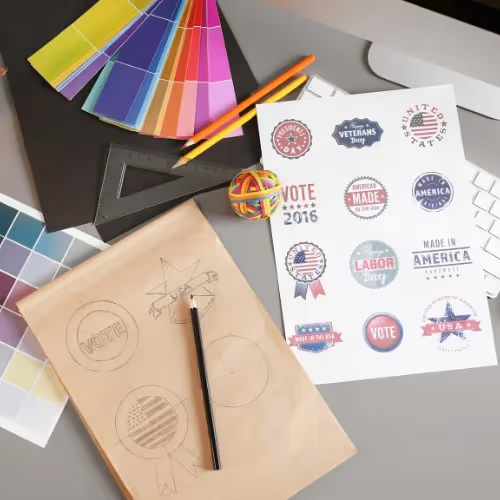
What is Graphic Design? | Complete Guide for Beginners
In today’s digital world, visual content plays a major role in communication. From social media posts to websites and advertisements, design is everywhere. This is where Graphic Design for Beginners becomes an essential skill to learn. Graphic design helps people share ideas in a creative and clear way using images, colors, and text.
For beginners, understanding graphic design may feel overwhelming at first. However, with the right guidance and practice, anyone can learn it step by step. This guide will help you understand what graphic design is, the tools you need, basic principles, and how to start your journey as a designer.
What is Graphic Design ?
Graphic design involves creating visual elements to share ideas and messages effectively. Designers use elements like images, colors, typography, and layout to make designs attractive and meaningful.
In simple terms, graphic design is about making ideas look visually appealing so that people can understand them easily. It is used in many areas such as branding, advertising, websites, social media, and print media.
For beginners, learning how to combine visual elements effectively is the first step toward becoming a successful designer.
Get a Free Consultation
Quick Contact
Essential Tools and Software for Designers
To start your journey in Graphic Design for Beginners, you need to understand the tools used in the industry. Here are some popular design tools:
Adobe Photoshop
Adobe Photoshop is one of the most widely used tools for editing images. It helps designers retouch photos, adjust colors, and create digital artwork. Its layer-based system allows detailed and flexible editing.
Adobe Illustrator
Adobe Illustrator is used for creating vector graphics such as logos and illustrations. It allows you to design scalable graphics that do not lose quality when resized.
CorelDRAW
CorelDRAW is another powerful design tool used for creating layouts, illustrations, and logos. It is known for its user-friendly interface and strong design features.
Canva
Canva is a beginner-friendly design platform. It offers ready-made templates and a drag-and-drop interface, making it easy to create social media posts, presentations, and posters quickly.
Step-by-Step Guide for Beginner Graphic Designers
Starting your journey in graphic design requires patience and consistent effort. Follow these simple steps:
Start with Basics
Learn the fundamentals of design such as layout, color, and typography. Choose one design tool and start practicing regularly.
Learn and Practice
Understand how fonts, spacing, and colors work together. Try creating simple designs and improve with each project.
Explore Advanced Features
Once you are comfortable with basics, explore advanced tools like layers, effects, and filters. This will help you create more professional designs.
Build a Portfolio
Create a portfolio to showcase your work. Include different types of designs to show your creativity and versatility.
Upgrade Your Skills
Graphic design is always evolving. Learn new trends like 3D design, animation, and modern styles to stay updated.
Color Theory and Typography Basics
Understanding color and typography is very important in Graphic Design for Beginners.
Color Theory
Colors play a powerful role in design. They can create emotions and influence how people feel.
Blue represents calmness and trust
Red shows energy and passion
Yellow brings happiness and positivity
Designers also use color combinations such as:
Analogous colors (next to each other)
Complementary colors (opposite on the wheel)
Triadic colors (evenly spaced)
Neutral colors like black, white, and gray help balance designs.
Important Principles of Graphic Design
To create effective designs, beginners should follow some basic principles:
Balance
Balance helps distribute elements evenly in a design. It can be symmetrical or asymmetrical.
Contrast
Contrast highlights important elements by using different colors, sizes, or shapes.
Alignment
Proper alignment creates a clean and organized layout.
Repetition
Repeating design elements creates consistency and strengthens the design.
White Space
White space improves readability and gives the design a clean look.
Future Trends in Graphic Design
Graphic design is always evolving with new technology and creative ideas. Designers are exploring fresh styles to create more engaging and interactive visuals. These trends are shaping the future of the industry and helping brands stand out in a competitive digital world.
Surrealism
Surrealism in graphic design focuses on imagination and creativity. It blends real-world elements with dream-like visuals to create unique and eye-catching designs. Designers often use unexpected combinations, floating objects, and unusual perspectives to grab attention.
This style allows designers to tell stories in a creative way and express ideas that go beyond reality. Surreal designs are widely used in advertising, branding, and digital art because they leave a strong impression on viewers and make content more memorable.
Data Visualization
Data visualization is becoming more important as businesses rely on data to make decisions. Designers use charts, graphs, and infographics to present complex information in a simple and clear way. This helps people understand data quickly without confusion.
Modern data visualization focuses on interactive elements, allowing users to explore information easily. With the rise of digital platforms, designers are creating engaging visuals that combine design and data, making information both useful and visually appealing.
3D Graphics
3D graphics are growing rapidly in the world of graphic design. Designers are using 3D elements to create realistic and immersive visuals. These designs are commonly used in gaming, product design, marketing, and virtual experiences.
With advanced tools and software, creating 3D designs has become easier and more accessible. 3D graphics help brands present their products in a more detailed and engaging way, improving user experience and capturing audience attention effectively.
Neomorphism
Neomorphism is a modern design trend that focuses on simplicity and soft visuals. It uses light shadows, smooth gradients, and subtle highlights to create a three-dimensional effect. This style gives designs a clean and elegant appearance.
Neomorphism is often used in user interface (UI) design, especially in mobile apps and websites. It creates a modern look while maintaining a simple and minimal design. This trend is popular because it improves user experience and makes interfaces feel more interactive and visually pleasing.
Why Learn Graphic Design?
Learning Graphic Design for Beginners offers many benefits:
Helps express ideas creatively
Improves communication skills
Opens career opportunities
Useful for personal branding and business
Increases demand in digital marketing
With the growing importance of visual content, graphic design is a valuable skill in today’s world.
Conclusion
Graphic design is a powerful way to communicate ideas visually. For anyone starting out, learning Graphic Design for Beginners can open many creative and professional opportunities. By understanding design basics, practicing regularly, and using the right tools, you can build strong skills over time.
As you continue learning, focus on improving your creativity and staying updated with new trends. Graphic design is not just about making things look good—it is about solving problems and communicating messages effectively. With dedication and practice, you can become a skilled graphic designer and create impactful visual content.